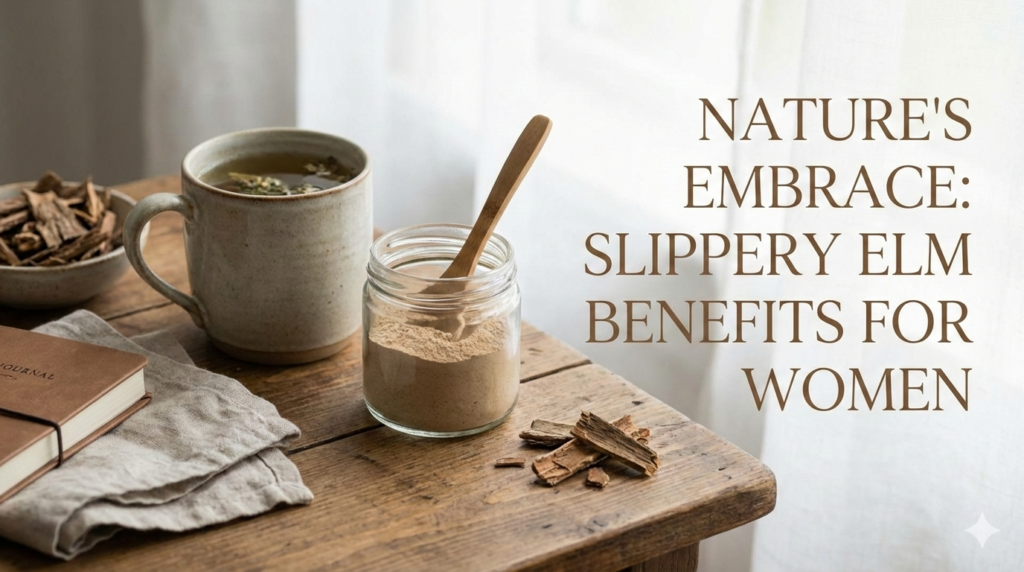
In the world of herbal medicine, few remedies have stood the test of time as gracefully as Slippery Elm. Traditionally used by Native American communities for centuries, this North American native tree (Ulmus rubra) is now a staple in the modern woman’s wellness toolkit.1
Whether you’re scrolling through wellness trends on social media or browsing the aisles of a health food store, you’ve likely heard about the “magic” of slippery elm. But what does the science say? From soothing digestive distress and acid reflux to supporting skin health and intimate wellness, slippery elm offers a unique range of benefits specifically suited to the female body.
In this comprehensive 2000-word guide, we’ll dive deep into the benefits, science, safety, and best ways to use slippery elm to transform your health.
What is Slippery Elm?
Slippery elm, also known as Red Elm, Moose Elm, or Indian Elm, is a tree native to eastern North America.2 The medicinal part of the tree isn’t the leaves or the seeds, but the inner bark.3
When this bark is harvested and ground into a powder, it contains a high concentration of mucilage—a type of soluble fiber that turns into a slick, soothing gel when mixed with water.4 This “slippery” quality is exactly why it is so effective at coating and protecting the internal and external membranes of the body.
Key Nutritional Components:
-
Mucilage: The primary active ingredient that provides a protective coating.5
-
Tannins: Known for their astringent properties, which help “tighten” and heal tissues.
-
Antioxidants (Polyphenols): Combat oxidative stress and inflammation.6
-
Minerals: Contains traces of calcium, iron, and magnesium.
1. Digestive Health: The “Internal Band-Aid” for Women
Digestive issues like Irritable Bowel Syndrome (IBS), bloating, and acid reflux are statistically more common in women than in men. Slippery elm acts as a natural demulcent, meaning it forms a film over a mucous membrane to relieve inflammation.
Relief from Acid Reflux and GERD
For women struggling with heartburn or Gastroesophageal Reflux Disease (GERD), slippery elm is a game-changer. The mucilage coats the esophagus and stomach lining, creating a physical barrier against stomach acid.9 Unlike over-the-counter antacids that simply neutralize acid, slippery elm actually soothes the irritation caused by the acid.
Managing IBS and Bloating
IBS-C (constipation-predominant) and IBS-D (diarrhea-predominant) can be debilitating. Slippery elm is unique because it is “amphoteric”—it can help with both:
-
For Constipation: The mucilage adds bulk and lubrication to the stool, making it easier to pass.11
-
For Diarrhea: It soothes the irritated intestinal lining and helps slow down excessive movements.12
Prebiotic Effects
Recent research suggests that slippery elm may act as a prebiotic, feeding the “good” bacteria (like Lactobacillus) in your gut.13 A healthy gut microbiome is essential for hormone regulation, mood stability, and a strong immune system.
2. The “Slippery” Secret: Vaginal Health and Lubrication
One of the most talked-about slippery elm benefits for women involves intimate health. There is a growing movement of women using slippery elm to address vaginal dryness and improve overall lubrication.14
How It Works (The Theory)
While there are few large-scale clinical trials specifically targeting vaginal tissue, herbalists believe that because slippery elm increases mucilage production in the body’s mucous membranes (mouth, throat, gut), it may have a systemic effect on the vaginal lining as well.
Expert Insight: The body’s mucous membranes are interconnected. When you hydrate and soothe the gut lining with mucilage, many women report a “trickle-down” effect that improves natural moisture levels elsewhere.
pH Balance and Yeast Infections
Slippery elm’s prebiotic properties don’t just stop at the gut. By supporting healthy bacteria, it may indirectly help maintain the acidic environment required to prevent yeast infections and bacterial vaginosis (BV).
3. Skin Care: A Natural Glow from the Inside Out
Women have used slippery elm topically and internally for beauty for generations.15 Its anti-inflammatory properties make it an excellent choice for various skin conditions.16
Acne and Eczema
Inflammation is the root cause of many skin flare-ups. Taking slippery elm internally helps reduce systemic inflammation, which can clear up hormonal acne. Topically, a slippery elm “poultice” (a paste made from the powder) can be applied to:
-
Soothe eczema and psoriasis patches.17
-
Calm redness from rosacea.
-
Accelerate the healing of minor burns or rashes.18
Anti-Aging Benefits
Because slippery elm is rich in antioxidants and provides deep hydration via mucilage, it helps maintain skin elasticity.19 Hydrated skin is more resilient against fine lines and wrinkles.
4. Urinary Tract Support (UTIs and Cystitis)
Urinary tract infections (UTIs) and Interstitial Cystitis (IC) are significantly more prevalent in women. Slippery elm is traditionally used to soothe the urinary tract.20
When you consume slippery elm, it is believed to cause a reflex stimulation of nerve endings in the gastrointestinal tract, which leads to increased mucus secretion in the urinary tract. This extra layer of mucus can protect the bladder wall from irritating substances in the urine, providing relief from the “burning” sensation of cystitis.
5. Weight Management and Metabolism
While not a “weight loss pill,” slippery elm can support weight management goals in several ways:21
-
Satiety: The high fiber content helps you feel full longer, reducing the urge to snack.
-
Blood Sugar Stability: Mucilage can slow the absorption of sugars, preventing insulin spikes.22
-
Detoxification: By promoting regular bowel movements, it helps the body eliminate waste more efficiently.
How to Use Slippery Elm: Forms and Dosages
To reap the full benefits, it’s important to choose the right format for your specific needs.
| Form | Best For | Typical Dosage |
| Powder | Best overall value; versatile for tea or topical use. | 1–2 tablespoons mixed with water. |
| Capsules | Convenience and travel. | 400mg – 500mg, 3 times daily. |
| Lozenges | Sore throat and immediate acid reflux relief. | As needed (up to 8 per day). |
| Tea | Gentle digestive support and hydration. | 1 cup, 2–3 times daily. |
How to Make a Slippery Elm “Slurry”
The most effective way to take the powder for digestive issues is a slurry:
-
Mix 1 tbsp of slippery elm powder with a small amount of cold water to make a paste (this prevents clumping).
-
Slowly add 1 cup of warm (not boiling) water while stirring.
-
Add a dash of cinnamon or honey for taste.
-
Drink 30 minutes before meals.
Safety, Side Effects, and Precautions
While slippery elm is classified as “Generally Recognized as Safe” (GRAS) by the FDA, there are a few important considerations for women.
1. Medication Interference
Crucial Note: Because slippery elm coats the digestive tract, it can decrease the absorption of other medications.25 * The Rule: Take slippery elm at least 2 hours before or after any oral medications or birth control pills.
2. Pregnancy and Breastfeeding
Historically, there were concerns about slippery elm causing miscarriage.27 This originated from the practice of using the whole bark (inserted into the cervix), which is very different from swallowing the inner bark powder.28 However, most doctors still recommend avoiding it during pregnancy due to a lack of modern safety data. Always consult your OB-GYN before use.
3. Allergies
If you are allergic to elm pollen or have a history of sensitivity to tree barks, start with a very small dose to test for a reaction.
Comparison: Slippery Elm vs. Marshmallow Root29
Many women wonder which “mucilage-rich” herb is better. Here is a quick comparison:
| Feature | Slippery Elm | Marshmallow Root |
| Primary Strength | Digestive tract and stomach lining. | Urinary tract and respiratory system. |
| Nutrient Density | Higher in minerals and fiber. | Higher in cooling polysaccharides. |
| Sustainability | Endangered in some areas; buy organic/farmed. | Generally more sustainable and easier to grow. |
Common Myths vs. Facts
Myth: “Slippery elm can cure PCOS or Endometriosis.”
Fact: While it can help manage the symptoms (like digestive upset and inflammation associated with these conditions), it is not a cure for hormonal disorders.
Myth: “You can use the powder as a vaginal suppository.”
Fact: Do not do this. Inserting unsterilized herbal powders into the vaginal canal can cause severe infections or irritation. Stick to oral consumption for systemic benefits.
Myth: “It works instantly for weight loss.”
Fact: It is a supportive tool for gut health and satiety, but not a fat-burner.
Final Thoughts: Should You Try It?
Slippery elm is a gentle, nourishing herb that offers profound benefits for the female body—particularly for those struggling with the “modern” trio of stress-related ailments: gut issues, skin inflammation, and hormonal imbalances.
By providing a protective shield for your internal systems, it allows your body to heal itself naturally. If you decide to add it to your routine, remember that consistency is key. Most women notice significant changes in their digestion and skin after 2–3 weeks of daily use.